Well report No. RR-1422 · T10N · R19W · SEC 10 · filed October 16, 2026
Energy Transition in OilWell report
Adani Ports takes Blue Planet Award at Oil Spill India 2026
Adani Ports has received the Blue Planet Award at Oil Spill India 2026, recognised for maritime spill-risk management and its energy transition programme across its terminals.
Field notes
- Adani Ports received the Blue Planet Award at Oil Spill India 2026.
- The award cited maritime risk management and energy transition performance.
- The announcement was carried by India Shipping News.
- The award was presented at a forum focused on spill preparedness and response across India's maritime sector.
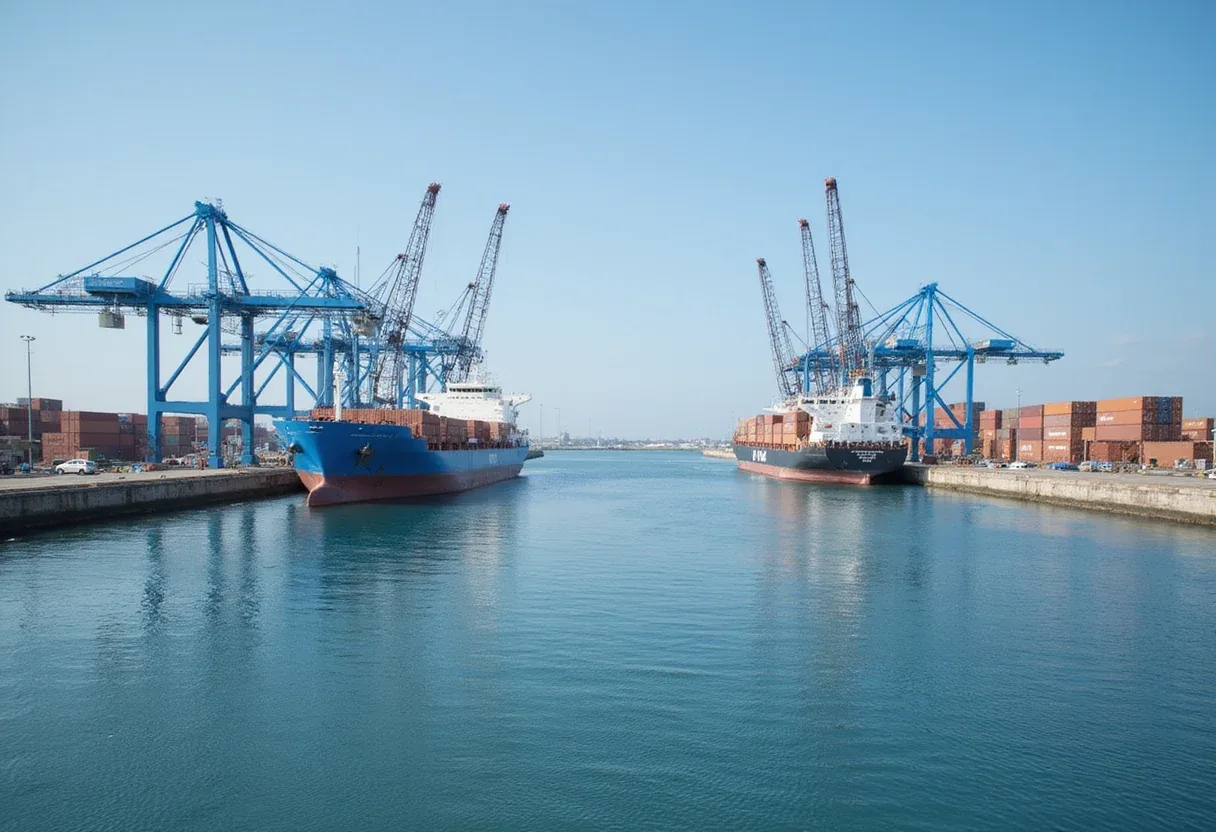
Adani Ports has received the Blue Planet Award at Oil Spill India 2026, the industry conference and exhibition addressing spill preparedness and response across India's maritime sector. The jury cited the company's record in maritime risk management and its energy transition programme as the basis for the honour.
For an operator running some of the largest cargo and energy-handling terminals on the Indian coastline, recognition at a spill-response forum is not a ceremonial matter. It signals how regulators, insurers and charterers now read the company's operational readiness at its berths and anchorages.
What does the award actually measure?
The Blue Planet Award was presented during Oil Spill India 2026, a gathering that draws port operators, coast guard authorities, response contractors and oil companies to review containment practice, tiered response planning and marine environmental protection.
Adani Ports earned the award on two stated grounds:
- Maritime risk management — the systems, drills and controls that determine how quickly a spill at a terminal can be detected, contained and recovered.
- Energy transition — the company's stated movement toward lower-carbon operations across its port and logistics network.
The pairing matters. Conference juries increasingly look for operators that treat spill preparedness and decarbonisation as one operational discipline rather than two separate compliance files.
Why spill readiness matters at energy terminals
Crude, product and LNG traffic concentrates risk at a small number of points on any coast: the berth, the loading arm, the SPM buoy, the approach channel. A port operator's tiered response plan — equipment stockpiles, vessel capability, notification chains and joint exercises with coast guard and oil companies — is the first line of defence between a transfer incident and a coastwide event.
India Shipping News carried the announcement, positioning the award within national coverage of maritime environmental performance rather than as a corporate honour in isolation.
For counterparties, the practical significance is straightforward. Charterers, P&I clubs and oil majors running inspection programmes weigh recognised risk-management performance when they allocate cargo and fix terminal windows. An award from a specialist spill forum does not replace a SIRE inspection or a port-state audit, but it functions as a public marker of where an operator stands against peers.
Energy transition as an operational criterion
The second leg of the citation reflects how port awards have shifted. Judging panels that once scored only safety statistics now include electrification of berth infrastructure, emissions handling and transition planning in their assessments.
Adani Ports has made its energy transition programme a central public commitment, and the Oil Spill India jury tied that programme directly to its risk-management record in making the award. Readers running terminals elsewhere will recognise the trend: environmental performance at the berth is increasingly scored as a single package.
The takeaway for practitioners
One recognition does not change a cargo slate. What it changes is the external read on Adani Ports' operational discipline at its terminals — the factor that underwrites loading windows, insurance terms and charterer confidence.
The watch item is whether the next conference cycle shows other Indian port operators matching that standard, tightening the benchmark for everyone handling crude and products on the coast.
via Google News: Oil and gas energy transition (Source)
More from James Calloway
Show full bio
Staff writer covering people, launches and day-to-day practice in Oil and gas industry operations and markets at Rig & Refinery.
520 articles
Adjoining reports
- Fincantieri Chases $25 Billion Subsea Security Market
- Miros Logs Double-Digit Offshore Monitoring Wins Across South America
- BPCL Andhra Mega Refinery Clears Key Environmental Hurdle
- Oceaneering's Q2 Scorecard Weighed Against Oilfield Services Peers
- BPCL Prepares $3-Billion Bond for Brazil Offshore Stake