Well report No. RR-1133 · T17N · R33W · SEC 5 · filed October 13, 2026
Midstream & PipelinesWell report
Central Asia–Europe gas route hit by explosion on Russian soil
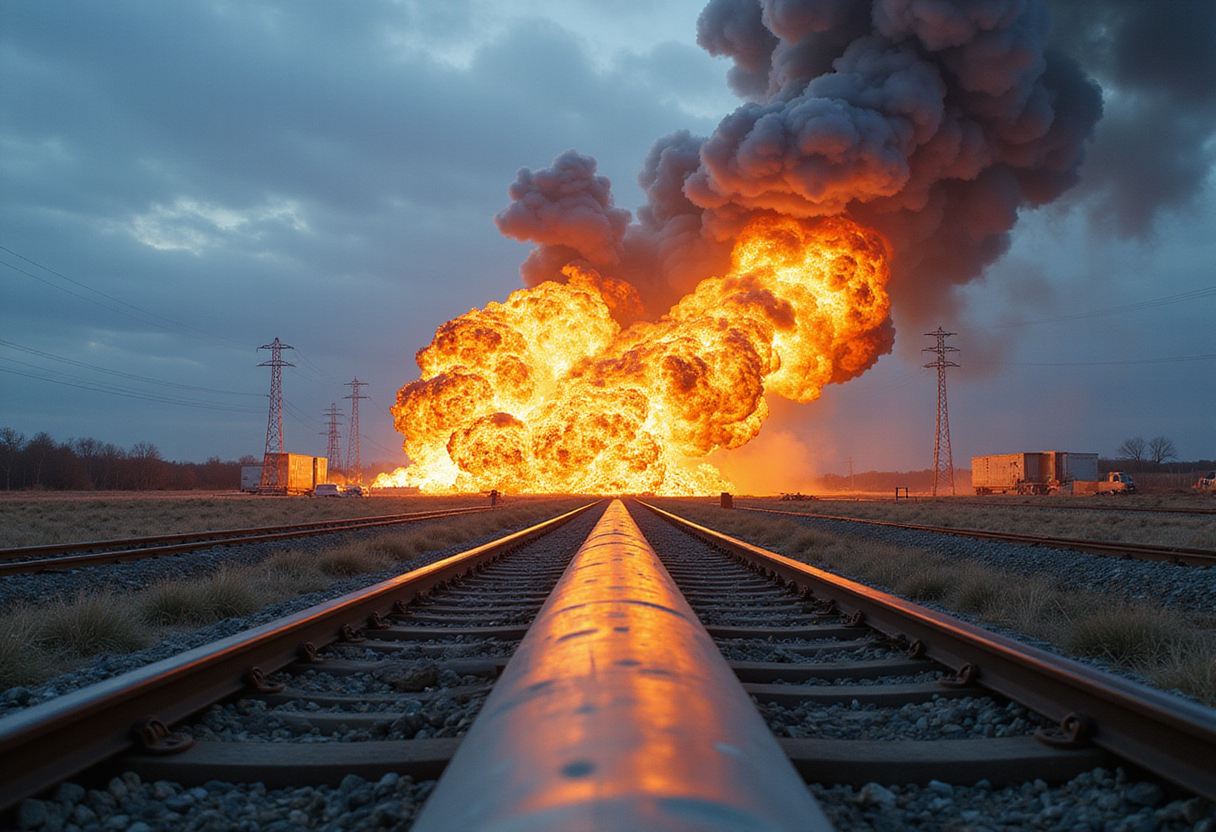
A Central Asia–Europe gas pipeline exploded inside Russia, Apa.az reports. No operator, cause or flow impact confirmed yet; European exposure likely limited.
Field notes
- A gas pipeline linking Central Asia to European markets exploded on Russian territory, per Apa.az.
- No operator statement, cause, casualty count or flow-impact figure had been released at time of reporting.
- Central Asian gas now flows mostly to China, limiting direct European supply exposure.
- No force majeure declaration on the affected route has surfaced.
- Watch item: operator confirmation and a repair timeline.
By Priya Raman
A gas pipeline that runs from Central Asia toward European markets exploded on Russian territory, according to a report from Azerbaijani news agency Apa.az. That single sentence is, at time of writing, almost everything the market has to trade on. No operator statement, no casualty figure, no throughput number, and no cause have entered the public record yet.
This desk treats that silence as part of the story. Pipeline incidents on export corridors move gas prices within hours. They also move them on rumor. Here is what the report says, what it does not say, and what watchers should track next.
What actually happened?
Apa.az reported the explosion on the section of pipeline inside Russia. The route described is one of the legacy corridors linking Central Asian producers — Turkmenistan, Uzbekistan, Kazakhstan — to Russian transit infrastructure and, indirectly, to European delivery points.
That is the full factual content available. The agency named no operator. It gave no location more precise than "in Russia." It offered no barrel-equivalent or million-cubic-metre figure for lost flow.
For context, not confirmation: Central Asian gas reaches Europe-bound systems largely through the Central Asia–Centre pipeline network (a Soviet-era trunk system running from Turkmen fields to Russian territory). Whether the affected line belongs to that system is unverified. I will not pretend otherwise.
Takeaway: a blast is confirmed by one outlet; everything downstream of that fact is still open.
What is not being said?
No operator statement had been published when this item went to press. That gap matters. When Gazprom or a Central Asian national operator confirms an incident, they typically attach a start date for repairs and a flow impact estimate. Neither exists here.
Second gap: no cause. Russian pipeline corridors have seen both accidental failures and deliberate hits during the past three years of regional conflict. Apa.az did not specify. Any attribution you read elsewhere right now is inference, and inference on gas corridors tends to get priced before it gets checked.
Third gap: no force majeure notice. Traders watch for those declarations (a legal step letting a supplier suspend contracted deliveries without penalty). None has surfaced.
Takeaway: the absence of an operator line means the market is reading a headline, not a supply outage — yet.
Does this move molecules to Europe?
Probably not many, on the numbers we can't yet rule out. Central Asian transit volumes through Russia are a fraction of what they were in the Soviet era; most Turkmen gas now flows east to China, not west. A disruption on this corridor would register in regional balances before it registered in TTF (the Title Transfer Facility, the Dutch hub that sets the European gas benchmark).
Still, sentiment trades faster than molecules. A headline containing the words "gas pipeline," "explosion" and "Russia" has moved European gas futures on thinner evidence than this. Any price pop today is commentary by the market, not a measured supply loss.
Takeaway: European exposure is likely small, but headline risk on Russian energy infrastructure is priced instantly regardless.
What to watch next
- Operator confirmation. Watch for a statement from Gazprom, or from the Turkmen, Uzbek or Kazakh export utilities.
- Repair timeline. Trunk-line blast repairs on this class of pipeline typically run weeks, not days — but no estimate exists yet.
- Cause attribution. Accident versus deliberate act changes the risk premium on every other Russian corridor.
- Flow data. Nomination figures on affected entry points will show the real outage size within a day or two.
The watch item here is the operator statement and its repair date. Until then, treat every number you see on this incident as unattributed analysis, because that is exactly what it is.
via Google News: Pipelines and midstream (Source)
More from Priya Raman
Show full bio
Senior reporter covering technology and product news in Oil and gas industry operations and markets at Rig & Refinery.
476 articles
Adjoining reports
- Central Asia–Europe Gas Route Hit by Explosion in Russia
- Trans-Caspian Oil Pipeline Back on the Table as Risk Map Shifts
- Saudi Pipeline Shutdown Blamed on Iran-Backed Iraqi Militias
- Saudi East-West Pipeline Reported Flowing Normally, Bloomberg Says
- Ukraine Strikes Russian Refinery, Oil Pipeline Hub: Bloomberg