Well report No. RR-6665 · T21N · R8W · SEC 21 · filed October 15, 2026
Upstream Drilling & ProductionWell report
Eleven Workover Rigs Reach Venezuelan Fields, First in 15 Years
Eleven 550-hp workover rigs reach Venezuelan fields this month, NABEP says — the first new repair units in over 15 years, with two 1,500-hp drillers already in-country.
Field notes
- Eleven 550-hp workover rigs deploy in Venezuela this month, per NABEP's 13 October announcement — first new units in over 15 years.
- Two 1,500-hp drilling rigs arrived 7 October.
- NABEP reports purchases of 60 rigs, 30 steam boilers and 70 pieces of heavy machinery.
- Equipment has not been tied to named projects or contracted scopes in the release.
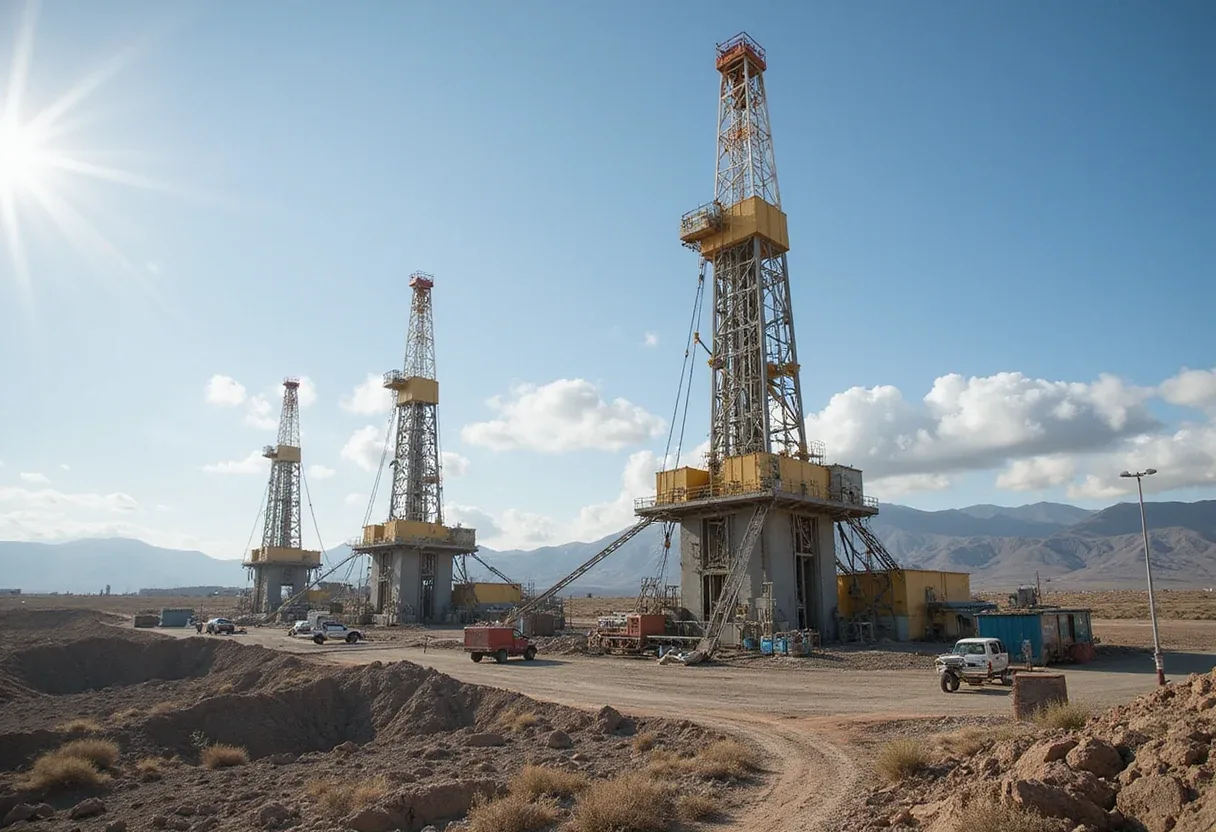
Eleven new 550-horsepower workover rigs will begin operating in Venezuela's oil fields this month, the first new mobile repair-and-maintenance units to enter the country in more than 15 years, according to North American Blue Energy Partners (NABEP), which announced the deployment on 13 October.
The workover units follow two 1,500-horsepower drilling rigs that arrived on 7 October. NABEP says more equipment is on the way.
For operators and service hands who have worked the Orinoco Belt and the older western producing regions, the arrival matters for one reason: workover capacity sets the ceiling on how quickly shut-in and under-maintained wells can return to production. Fifteen years without new mobile repair units means a backlog of wells that need intervention before any volume growth shows up in the numbers.
What has actually been delivered?
NABEP's announcement, as the company states it, covers a growing equipment base:
- 60 rigs purchased to date
- 30 steam boilers
- 70 pieces of heavy machinery
The company describes the inventory as the largest heavy-equipment position of its kind in the country. That figure reflects purchases, not necessarily rigs currently rigged up and turning to the right — a distinction practitioners will want to track as deployments proceed.
The two 1,500-hp drilling rigs are the more consequential part of the cargo. Workover units restore existing wells; drilling rigs add new ones. At 1,500 hp, the units are sized for medium-depth work, sufficient for redevelopment drilling in mature fields and, depending on configuration, for the heavier horizontals the Orinoco heavy-oil play demands.
Steam boilers point in a specific direction. They serve cyclic steam stimulation and steamflood operations — the thermal recovery methods the Orinoco Belt depends on to mobilize extra-heavy crude. Thirty boilers suggest NABEP expects thermal maintenance work, not just conventional well repair.
Sanctioned work or appraisal-stage ambition?
The company's own framing is the only sourcing here. NABEP has announced equipment purchases and arrivals; it has not, in this release, tied the units to named projects, specific field operators, or contracted work programs. Until the rigs appear on signed scopes with PDVSA or joint-venture partners, practitioners should read this as capacity entering the country ahead of disclosed contract awards.
That distinction matters because Venezuela's production recovery has been equipment-constrained for years. Wells fail and stay failed when no workover rig is available; decline rates compound quietly. Eleven repair units and a pair of drillers will not reverse that alone, but they remove the first and most basic bottleneck.
What changes for the market?
Venezuela's output path has been the subject of considerable price commentary, with analysts variously crediting or dismissing recovery prospects. Treat that commentary as analysis, not settled fact. What NABEP's announcement establishes is narrower and firmer: physical equipment is arriving, in quantity, on published dates.
For service companies, the arrival introduces a competitor with scale in workover and thermal maintenance. For operators weighing re-entry or partnership, it shortens the queue for intervention services. For traders, the number to watch is whether national production prints move in the quarters after these units mobilize — rigs on the dock tell you nothing until they tell you everything.
The watch items from here: which fields receive the first workover assignments, whether additional drilling rigs follow the 7 October pair, and confirmation of contracted scopes behind the 60-rig purchase total. Equipment has landed; the production data has not yet spoken.
via OilPrice.com (Source)
More from James Calloway
Show full bio
Staff writer covering people, launches and day-to-day practice in Oil and gas industry operations and markets at Rig & Refinery.
508 articles
Adjoining reports
- Rystad Models Venezuela Output at 1.6 Million BPD by 2028
- Venezuela's 65 Billion Barrels Anchor Case For Oilfield Services Stocks
- Rystad Models Venezuela Output Recovery to 1.8 Million Bpd by 2030
- SLB targets Venezuelan work as Trump loosens OFAC licensing window
- Venezuela Revival Would Need Over $100 Billion, Analysis Finds