Well report No. RR-1391 · T13N · R21W · SEC 13 · filed October 14, 2026
Refining & PetrochemicalsWell report
First Crude Cargo Arrives at Aramco's New China Refinery Venture
Aramco's new China refining venture has received its first crude cargo, signaling the start of commissioning ahead of full startup, Rigzone reports. No throughput or startup date disclosed yet.
Field notes
- Saudi Aramco's new China refining venture received its first crude cargo.
- The cargo signals the commissioning phase, ahead of commercial startup.
- No startup date or throughput figure was disclosed in the report.
- The move extends Aramco's strategy of securing long-term crude placement in China.
By Priya Raman
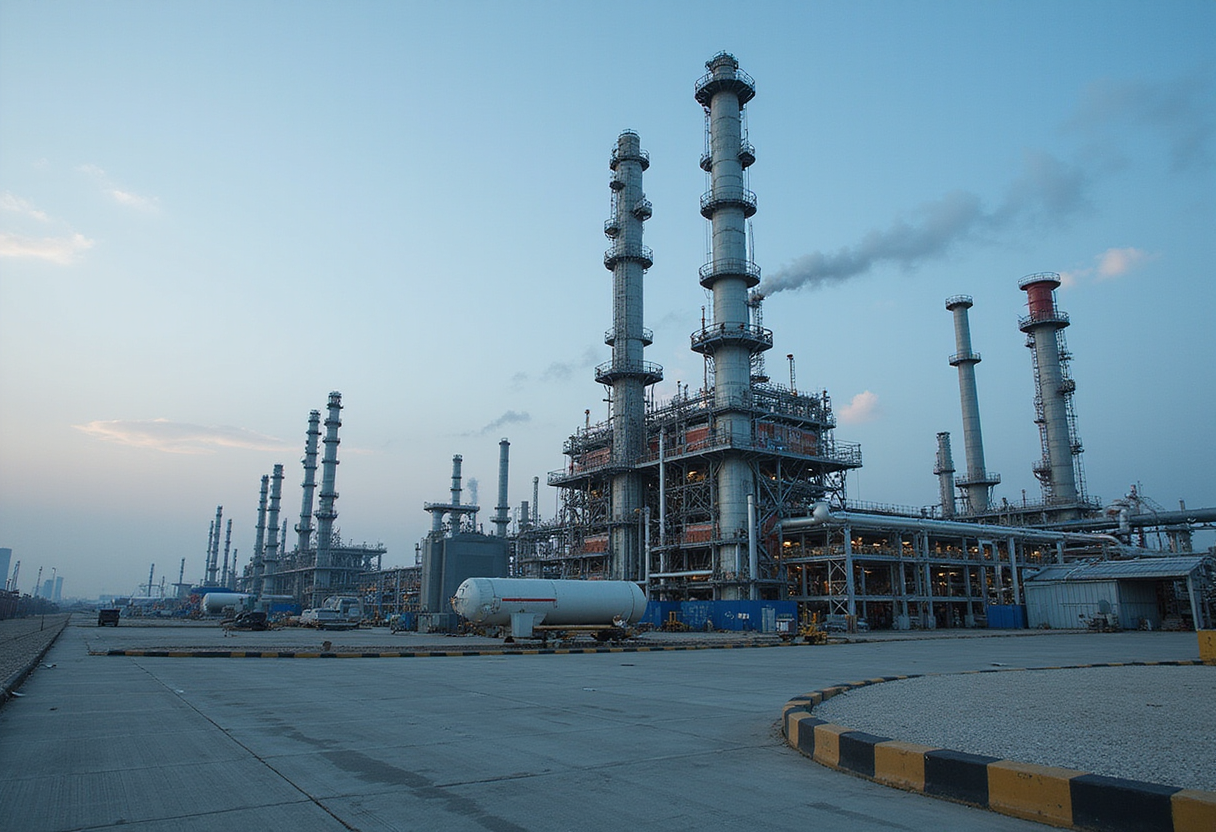
Saudi Aramco's new refining venture in China has received its first crude cargo, Rigzone reports. That single shipment matters more than it looks. A first crude cargo means tanks, marine facilities and crude units are mechanically ready. It is the operational signal that commissioning has started.
The cargo is the project's transition from construction site to operating asset. It also marks another step in Aramco's strategy of locking in long-term crude placement in China, the world's largest import market.
What does a first crude cargo actually tell you?
In refinery speak, first crude is the moment feedstock enters the plant's systems ahead of initial processing runs. It precedes full commercial operation, sometimes by months.
The sequence is standard. Vessel discharges. Crude goes to storage. Units begin charging and circulation. Then the complex ramps toward nameplate capacity (the design throughput a refinery is built to sustain).
So the cargo confirms readiness, not production. We don't yet know from the report when the first refined product will roll out. Aramco has not, in this instance, put a date on full startup. Expect that gap to be the story's next chapter.
Why China, and why Aramco?
Aramco has spent years shifting downstream capital toward Asia. Refining equity in China serves two purposes at once: it secures an outlet for Saudi crude, and it captures margin along the barrel that upstream sales alone leave behind.
For the Chinese partner, an Aramco-linked supply chain means feedstock certainty. Asian refiners have spent the past two years chasing favorable grades. Long-term crude supply tied to equity is one hedge against that volatility.
What's not in the announcement?
The report confirms the cargo and nothing else of substance. No throughput figure. No startup date. No detail on which grades made up the cargo, though Saudi supplies to Chinese ventures typically lean on Arab Light and Arab Heavy.
That omission is worth noting. Crude slate composition drives yield, and yield drives the economics that will decide whether this venture earns its keep or merely processes barrels at thin margins.
The watch item
The number to watch now is the startup date for commercial operations, followed by ramp-up pace toward design capacity. Until those land, this remains a commissioning story, not a production story.
Takeaway: first crude means the plant works on paper is now being tested in steel — but refined product output, not cargo arrivals, will be the real verdict.
via Google News: Refineries and petrochemicals (Source)
More from Priya Raman
Show full bio
Senior reporter covering technology and product news in Oil and gas industry operations and markets at Rig & Refinery.
499 articles
Adjoining reports
- First Crude Cargo Arrives at Saudi Aramco's New China Refinery Venture
- First Crude Cargo Reaches Aramco's New China Refinery Venture
- First Arabian Crude Cargo Reaches China's Huajin Aramco Refining Complex
- Aramco Chief Puts Global Stockpile Rebuild at Two Years
- Saudi Crude Exports Hit Post-War High Despite Pipeline Outage