Well report No. RR-9341 · T17N · R39W · SEC 17 · filed October 13, 2026
Upstream Drilling & ProductionWell report
Kazakhstan Crude Output Climbs to 1.85 Million B/D in September
OPEC's monthly assessment puts Kazakhstan's September crude output at 1.85 million b/d, a rise that lands squarely in the middle of the OPEC+ quota conversation.
Field notes
- Kazakhstan crude output rose to 1.85 million b/d in September, per OPEC.
- Figure reported via Trend News Agency, citing OPEC's monthly assessment.
- OPEC secondary sources are the reference for OPEC+ quota compliance.
- At that rate, output equates to roughly 62 million tonnes per year.
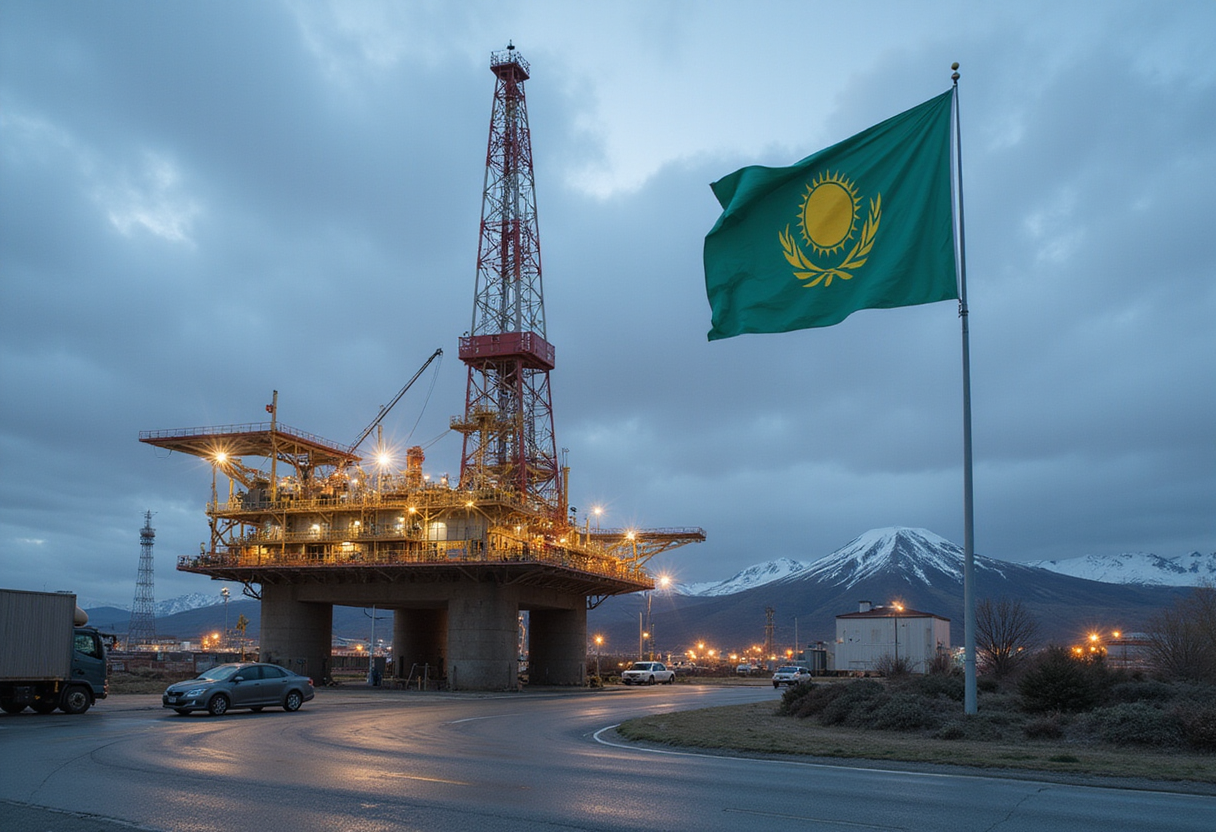
Kazakhstan pumped 1.85 million b/d of crude oil in September, according to OPEC's latest monthly assessment, as reported by Trend News Agency. The figure marks a rise in output from a producer that has spent much of the past year at the centre of OPEC+ quota discussions.
The number comes from the Vienna-based producer group's regular monitoring of supply. OPEC publishes its view of member and non-member output each month. Its secondary-source surveys are the reference against which OPEC+ production targets are measured. That makes the September reading a data point with consequences. It is not simply a statistic.
What does the 1.85 million b/d figure mean?
The level matters for two audiences. For crude buyers and refiners along the Caspian export route, Kazakh barrels feed the pipeline and tanker programmes that move crude westward toward the Mediterranean market. A higher output reading signals more available cargo supply for term and spot lifters.
For OPEC+ compliance watchers, the same figure carries a different weight. Kazakhstan has been one of the producers whose actual output has been closely compared against its allocated quota under the OPEC+ supply agreement framework. Each monthly OPEC report is parsed for exactly this comparison. A rise in production invites the obvious question: how does the level sit against the country's target?
The Trend report cites the OPEC assessment. It does not, in the item carried, spell out the month-on-month or year-on-year comparison. So the precise increment stays with the full monthly report. What the headline number establishes is direction.
How should readers frame the move?
Direction, in trade-press terms, is enough to work with. A producer posting a higher monthly figure, while operating inside an OPEC+ regime built on restraint, creates the conditions for the next chapter: compensation schedules, quota reallocations, or quiet diplomacy between Astana and Vienna. None of that is in the Trend item. All of it follows from the number.
For scale, 1.85 million b/d is roughly 62 million tonnes per year if run continuously at that rate through the year. Put another way, that is enough crude to load several very large crude cargoes every day. Refiners price that availability into the Caspian and Mediterranean differentials they negotiate.
OPEC's monthly data remains the benchmark. Market participants treat the producer group's secondary sources as the number of record, ahead of national statistics or tanker-tracking estimates, precisely because quota compliance is judged on it.
What happens next?
The watch items are straightforward. First, the full OPEC monthly report, where the September figure sits alongside the quota comparison and the group's demand outlook. Second, the October data, which will show whether the rise holds or reverses. Third, any OPEC+ commentary on compensation for volumes produced above allocation.
The verdict, in plain words: Kazakhstan produced more in September, OPEC wrote it down, and the quota arithmetic now does the talking.
via Google News: OPEC and oil markets (Source)
More from Daniel Okafor
Show full bio
Market editor covering companies, deals and strategy in Oil and gas industry operations and markets at Rig & Refinery.
408 articles
Adjoining reports
- Russia's Oil Output Fell 38,000 BPD in September, OPEC Data Shows
- OPEC+ Output Rose 900,000 bbl/d in September, Monthly Report Says
- Kazakhstan Plans Near 30 Million Tonne Refining Build by 2031
- Kazakhstan, OPEC+ Allies Hold November Output Steady
- OPEC's Daily Crude Production Back in Focus as Traders Parse Supply