Well report No. RR-3255 · T21N · R46W · SEC 33 · filed October 13, 2026
Petroleum MarketsWell report
OPEC+ ministers put maritime security at heart of stability push
OPEC+ ministers have made the security of maritime shipping routes a central plank of their market-stabilisation message, GDNOnline reported, putting tanker routing firmly on the producer agenda.
Field notes
- OPEC+ ministers stressed secure maritime routes as a precondition for a balanced market, GDNOnline reported
- The reporting was carried under GDNOnline's KSA Business banner
- Ministers used the word 'stabilise' rather than 'tighten', pointing to a downside-risk focus
- No specific quotas, transit-state partners or insurance mechanisms were named in the report
- Watch items: any follow-up joint communiqué, the next JMMC meeting, and post-statement freight and differential moves
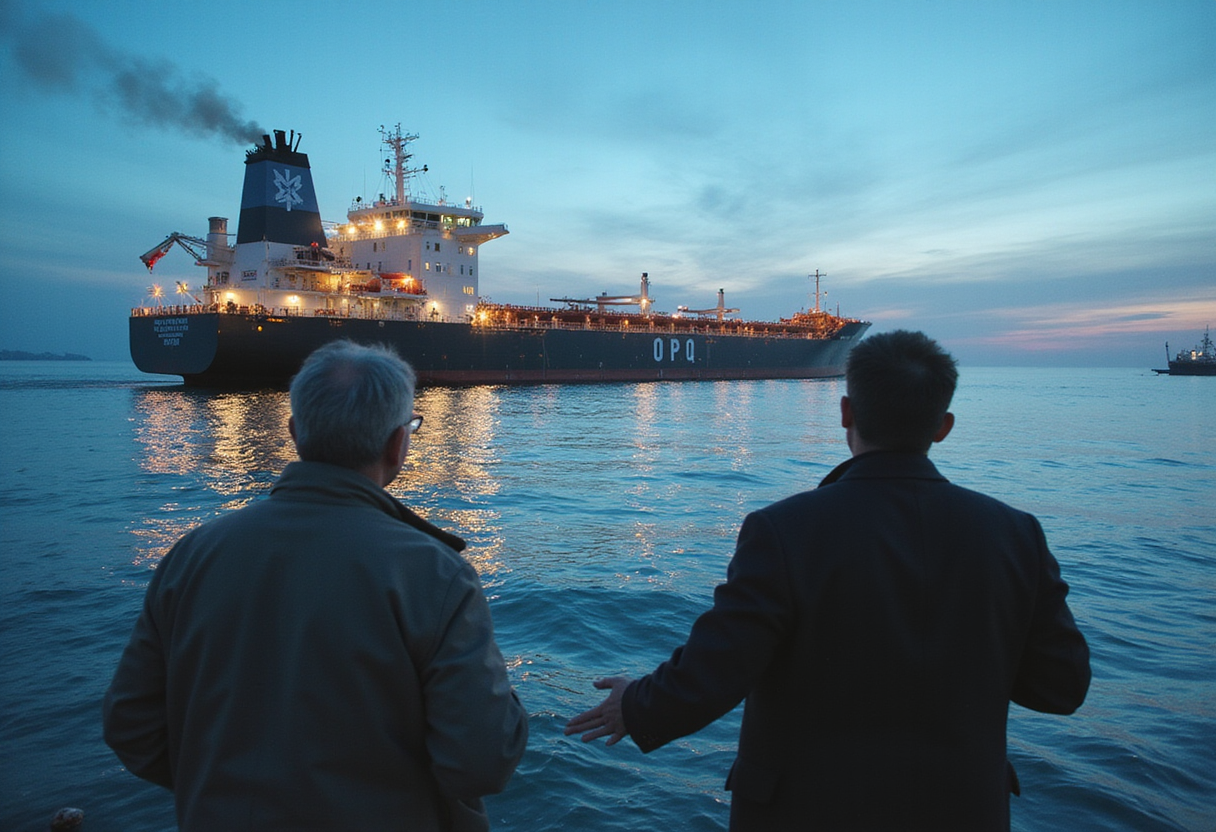
OPEC+ ministers have put the security of maritime shipping routes at the centre of their market-stabilisation message, GDNOnline reported. The phrasing pushes tanker routing — historically a transit-state and shipowner concern — squarely onto the producer group's agenda.
Why is maritime routing back on the OPEC+ agenda?
Crude and product flows between the Gulf, Europe and Asia run through a handful of sea lanes. When any of those lanes is threatened, benchmarks move faster than any production tweak can offset. Ministers' emphasis on "secure maritime routes" tells the market the bloc wants supply reliability framed as a shared responsibility of exporters, transit states and importers — not only a quota question.
For Saudi Arabia, the framing lands close to home. The Strait of Hormuz, Bab el-Mandeb and the Suez corridor shape the Kingdom's export geography. Disruption along any of those routes forces Brent and Dubai differentials out of band and pushes VLCC freight into territory that eventually filters through to retail fuel.
The point is not subtle. A sizeable share of seaborne crude passes through the Strait of Hormuz alone. Add Bab el-Mandeb transit on the other side of the Arabian Peninsula, and the Gulf's two main export corridors cover a slice of global supply that no spare-capacity argument can replace in a hurry.
What did the ministers actually say?
The GDNOnline report describes ministers "stressing" that secure maritime corridors are a prerequisite to a balanced market. The reporting stops short of naming individual speakers or publishing line-item commitments. In trade-press terms, that gap is itself a signal: ministers are aligning on a principle, not negotiating a number.
The soft wording — "stabilise" rather than "tighten" — points the bloc's near-term focus at preventing downside surprises, not engineering a price spike. That is the language of a group comfortable with current levels and worried about a supply scare, not a group chasing higher prints.
How does the message read in the trading rooms?
For Mediterranean and Northwest European refiners, the ministers' message reads as a quiet guarantee. Reliable Gulf flows keep complex margins in check and stop diesel cracks from spiking on the kind of routing disruption that has hit the market in recent quarters. A steady refill of North Sea and Med storage has tracked that confidence.
For Asian buyers, the same statement lands differently. Liftings from the Middle East to India, China, Japan and Korea have run on long routings via the Cape of Good Hope when Red Sea transits stalled. Ministers tying stability to maritime security effectively endorses the diplomatic effort to restore normal routing — and trims the insurance-and-bunker premium built into delivered prices.
Traders will also parse the message for what it does not say. There is no reference to specific quotas, no call for new transit-state partnerships, no mention of tanker insurance pools. The ministers have chosen to make a statement, not a deal.
What comes next?
The watch items sit in three places.
- Any joint communiqué that names specific corridors or transit-state partners.
- The next OPEC+ JMMC meeting, where the ministers' position meets the export-tape data.
- Freight and differential moves in the days after the statement — the market's first honest read on whether the political signal changed anything.
OPEC+ wants the conversation about supply to include the water the crude ships on. The shipping industry has heard that pitch before. Whether the words convert to fewer reroutings is the number to watch.
via Google News: OPEC and oil markets (Source)
More from Elena Vasquez
Show full bio
News editor covering technology and product news in Oil and gas industry operations and markets at Rig & Refinery.
433 articles
Adjoining reports
- Oil Slips as Saudi Arabia Offers Extra Crude via Hormuz After Attack
- OPEC+ Ministers Call for Stronger Maritime Security as Freight Rates Surge
- Saudi Arabia Shuts Pipeline That Served as Key Hormuz Bypass
- Gulf Producers Keep Crude Moving Through Iran Conflict
- Middle East Conflict Puts Saudi Arabia's Oil Pipeline to the Test