Well report No. RR-4699 · T1N · R24W · SEC 25 · filed October 15, 2026
Refining & PetrochemicalsWell report
OPEC Puts Africa's Refining Bill at $125 Billion Through 2050
OPEC's long-term outlook puts Africa's refining investment need at $125 billion through 2050 — about $5 billion a year, or one world-scale complex annually for 25 years.
Field notes
- OPEC estimates Africa needs $125 billion in refining investment through 2050.
- The figure averages roughly $5 billion per year over 25 years.
- The estimate comes from OPEC's long-term outlook, reported by IndexBox.
- The projection covers aggregate continental refining capital demand, not named projects.
- Annual final investment decisions will test whether the forecast holds.
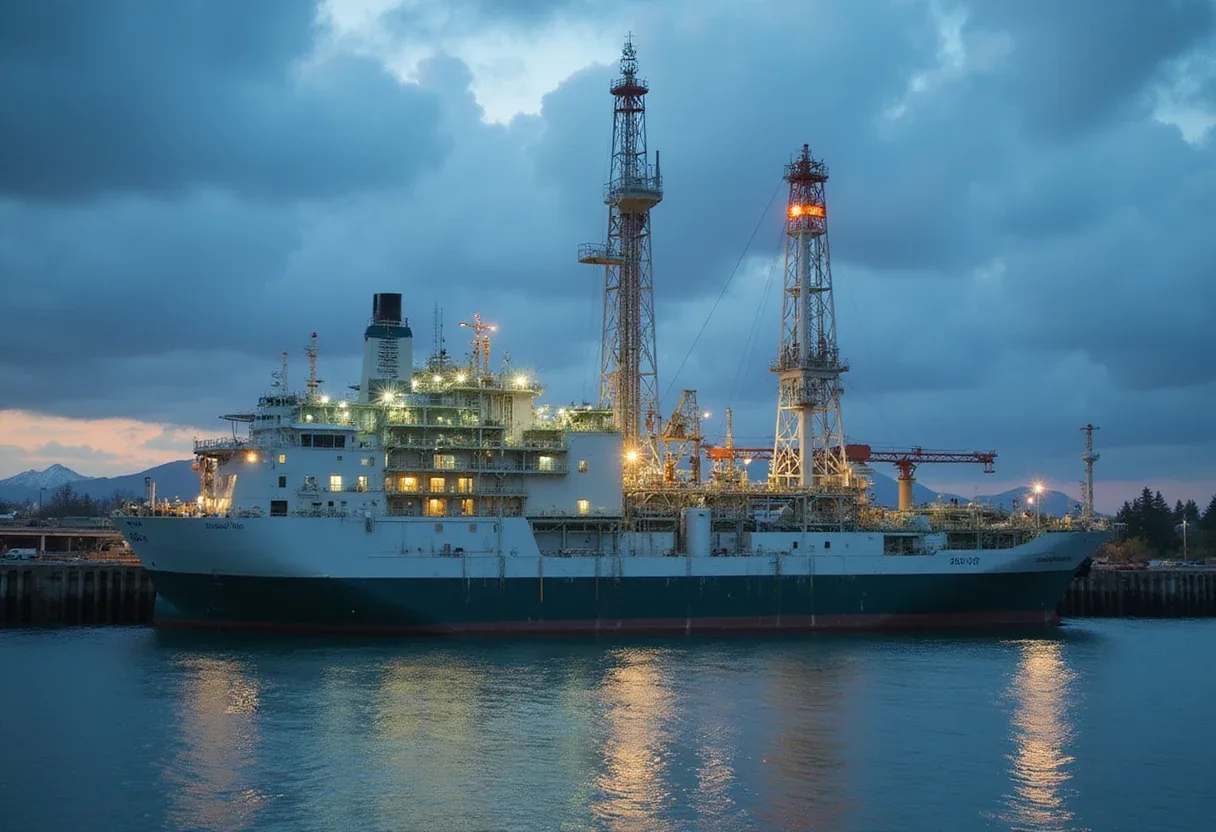
OPEC has put the cost of Africa's refining ambitions at $125 billion through 2050. The figure appears in the producer group's long-term outlook, as reported by IndexBox. It is a projection, not a cheque. The distinction matters.
What does the number actually cover?
The $125 billion is investment demand, spread across roughly a quarter of a century. Run the arithmetic and it comes to about $5 billion per year continent-wide. That is the capital OPEC believes African refining will need to absorb by mid-century — new crackers, upgrades, and replacements included.
The frame is basin-neutral. OPEC has not, in this outlook, itemised the money by refinery, licence, or coastal corridor. Dangote in Nigeria has already shown what a single complex costs when a private sponsor commits. Most of the continent's would-be sponsors have not.
Africa today exports crude and imports gasoline. That trade has persisted for decades. OPEC's number is, in effect, a bill for ending it.
Sanctioned versus speculative
Here the outlook requires discipline. Sanctioned African refining capacity is a short list. Appraisal-stage ambition is a long one. OPEC's $125 billion covers the aggregate need, and the group's own forecasts carry the usual caveats: demand projections through 2050 depend on population growth, vehicle fleets, and fuel policy that no one can guarantee.
Investment at $5 billion a year sounds manageable. It is roughly one world-scale refining complex per year, every year, for 25 years. Africa has not sustained that pace in any decade on record.
Why the demand case holds, and where it strains
OPEC's downstream view of Africa rests on consumption growth. The continent's petroleum product demand is rising while mature markets decline. Refiners in Europe and Asia currently supply much of that barrel. Local capacity would keep the refining margin at home.
The strain is financing. Refining is capital-heavy, slow-yielding, and exposed to the same energy transition policies that dampen enthusiasm elsewhere. Sponsors want certainty offtake and currency stability. Several African jurisdictions offer one, rarely both.
The watch item
The number to track is not $125 billion. It is annual FID flow. If African refining projects reach final investment decision at anything near $5 billion per year, the outlook holds. If they do not, the projection joins the long shelf of continental refining plans that aged badly.
OPEC revisits its World Oil Outlook each year. The next edition will show whether the $125 billion figure survives contact with actual capital discipline.
via Google News: OPEC and oil markets (Source)
More from Daniel Okafor
Show full bio
Market editor covering companies, deals and strategy in Oil and gas industry operations and markets at Rig & Refinery.
467 articles
Adjoining reports
- OPEC Puts Africa Refining Bill at $125 Billion by 2050
- OPEC Sizes Africa's Refining Investment Need at $125 Billion to 2050
- OPEC Sizes Africa's Refining Investment Need at $125 Billion
- Senegal Courts Turkish Partners for Up to $3.5 Billion Refinery Plan
- OPEC Sees Africa's Oil Demand Nearly Doubling by 2050