Well report No. RR-2529 · T15N · R46W · SEC 27 · filed October 13, 2026
Petroleum MarketsWell report
Record Tanker Rates Strand Heavy Crude Across the Americas
Record tanker rates have stranded over 5 million bpd of Canadian crude output, oversupplying heavy grades in the Americas while Asia and Europe run short.
Field notes
- Canada produces over 5 million bpd of crude, most of it heavy grades.
- About 4 million bpd of Canadian crude flows south to U.S. refineries.
- Middle East crisis has driven tanker rates to all-time highs and created a vessel shortage.
- Venezuelan production has moved higher after the U.S. disposed of the country's government arrangements.
- Americas face heavy-crude oversupply while Asia and Europe grapple with heavy-grade shortages.
By Daniel Okafor
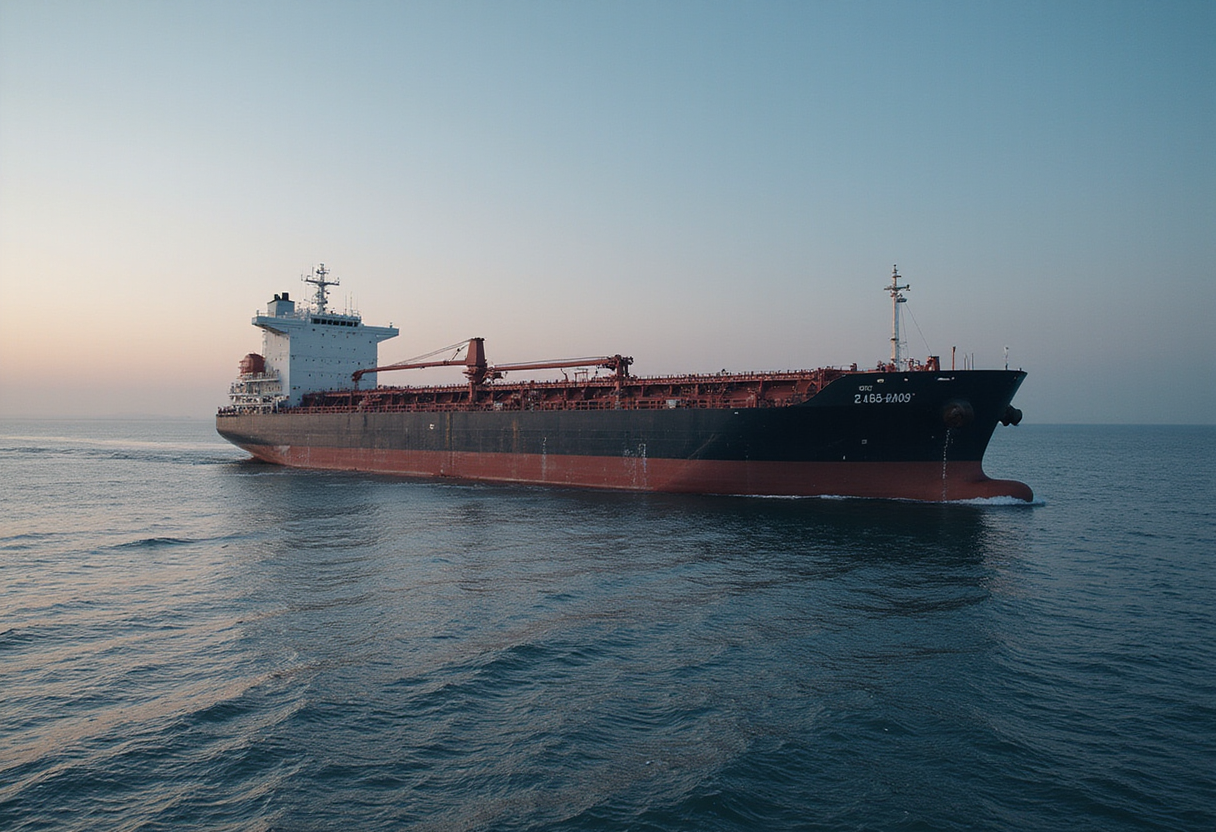
Record tanker freight has collided with 5 million bpd of Canadian crude, and the heavy-grade market in the Americas is losing the argument. All-time-high vessel rates out of the Middle East crisis have produced a genuine shortage of ships. The consequence reads like a logistics problem wearing a market-disorder costume: heavy crude is piling up in North and South America while Asia and Europe cannot find enough of it.
What do the numbers say?
Canada now produces more than 5 million barrels of crude per day, and most of that barrel count is heavy grades. Roughly 4 million bpd of it moves south to U.S. refineries, according to the source data. That is four-fifths of Canadian output riding on one trade lane.
The oversupply side of the ledger:
- North America holds more heavy crude than its refineries can comfortably absorb at current freight economics.
- South America joins the surplus, with Venezuelan production also moving higher after the U.S. disposed of the country's government arrangements, per the source.
- Asia and Europe sit on the opposite side, short of heavy grades and short of ships to fetch them.
The arithmetic is unkind. Freight at record levels makes the long haul to Asian cokers uneconomic for many cargoes, so the barrels stay home and discount.
Why does freight decide the heavy market?
Heavy crude does not travel by pipeline across oceans. It travels in tankers, and tankers are currently scarce, expensive, or both. The Middle East crisis pushed rates to all-time highs and created a vessel shortage, the source reports. When the freight bill rivals the discount a refiner demands for heavy feedstock, the cargo does not sail.
That single cost line now separates two markets. The Americas, oversupplied. Asia and Europe, undersupplied. Same crude, different continents, one freight rate making the decision for everyone involved.
Venezuelan barrels add to the western surplus. Production there has moved higher following the U.S. disposal of the country's government arrangements, according to the source. More heavy supply arriving into a market that cannot export it economically is not a subtle development.
What happens next?
The watch items are straightforward, if not simple. Freight rates govern the whole chain, so any de-escalation in the Middle East releases vessels and reprices the arbitrage. Absent that, Canadian and Venezuelan barrels keep discounting into U.S. Gulf Coast refiners, who enjoy cheap feedstock while Asian cokers pay for its absence.
Heavy-grade differentials are the number to watch. When the discount widens far enough to cover record freight, cargoes move and the glut drains. Until then, the Americas hold the barrels and the margin.
One takeaway in plain words: ships, not geology, are setting the heavy-crude price this season.
via cer-rec.gc.ca (Original)
More from Daniel Okafor
Show full bio
Market editor covering companies, deals and strategy in Oil and gas industry operations and markets at Rig & Refinery.
413 articles
Adjoining reports
- Canadian Refinery Outage Seen Tightening U.S. Fuel Supply
- Canada Eyes New Crude Pipe to Push More Barrels Toward Asia
- Venezuela's Oil Exports Fall 9% to 1.08 Million Bpd on Freight Costs
- Ottawa Fast-Tracks Pacific Oil Pipeline as Alberta Separation Vote Nears
- Asia Set to Absorb 70% of Canadian Oil Exports, Pipeline Executive Says