Well report No. RR-9012 · T2N · R23W · SEC 14 · filed October 13, 2026
Midstream & PipelinesWell report
Saudi Arabia Eyes Pipeline Expansion to Route Crude Around Hormuz
Saudi Arabia plans a major pipeline expansion to move crude around the Strait of Hormuz, OilPrice.com reports, but no capacity, cost, or timeline has been disclosed.
Field notes
- Saudi Arabia is planning a major expansion of its oil pipeline network to bypass the Strait of Hormuz, per OilPrice.com
- The report discloses no capacity figure, cost estimate, or timeline for the expansion
- Roughly a fifth of globally traded oil transits the Strait of Hormuz
- Existing Saudi bypass capacity runs via overland pipelines to Red Sea export terminals
- The plan remains strategic intent rather than a sanctioned project with an FID
By James Calloway
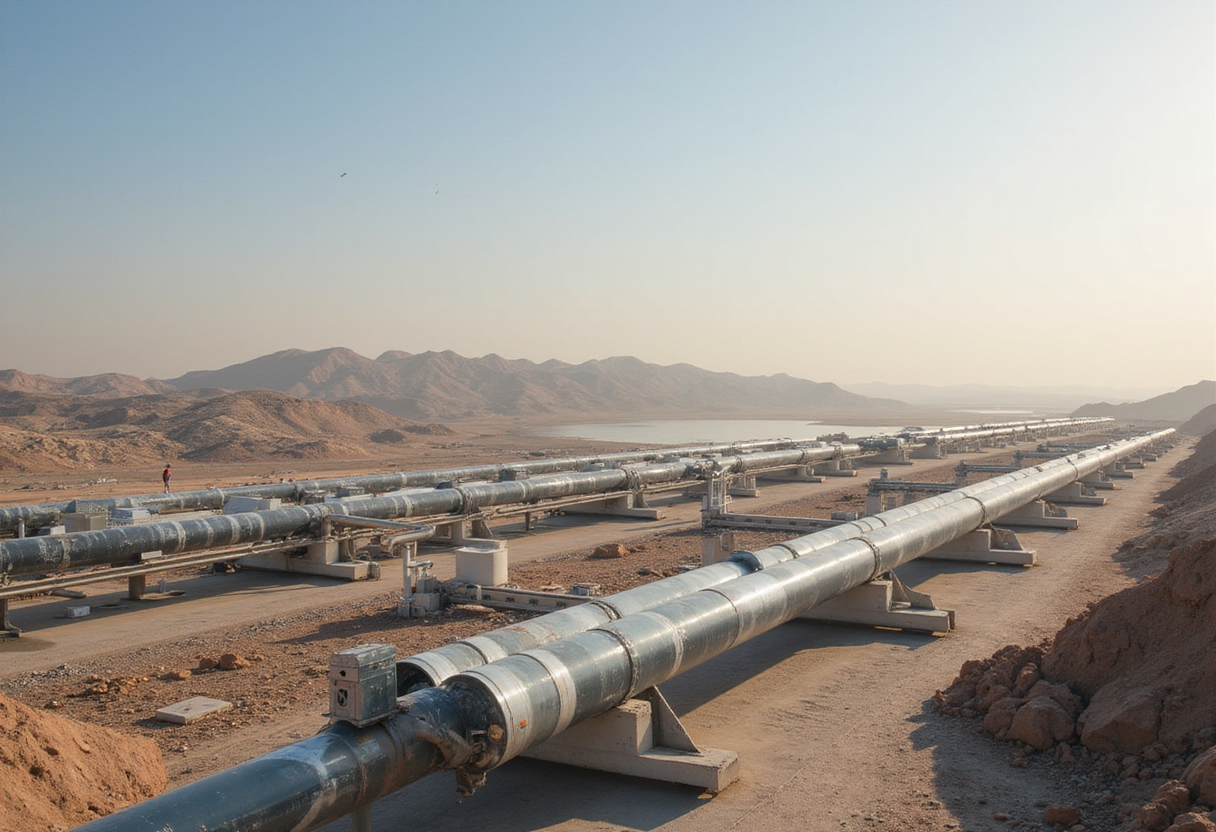
Saudi Arabia is planning a major expansion of its cross-country crude pipeline network to move barrels around the Strait of Hormuz, according to a report from OilPrice.com headlined "Saudi Arabia Plans Massive Expansion of Oil Pipeline to Bypass Hormuz."
The project targets the kingdom's answer to its single biggest logistical vulnerability: roughly a fifth of the world's traded oil transits Hormuz, and Saudi export capacity that does not depend on the strait is limited to what the existing overland system can pump to western coast terminals.
For anyone moving crude, freight, or refined product exposure through the Gulf, the headline question is not whether Riyadh wants a bypass. It has wanted one for decades. The question is how much extra capacity this expansion actually adds, and on what timeline.
What does a Hormuz bypass change?
The mechanics are straightforward. Crude produced in the Eastern Province can either load at Gulf-side terminals inside the strait or travel westward across the kingdom by pipeline to Red Sea export terminals, where tankers sail without passing Hormuz at all.
A larger east-to-west system changes three things for practitioners:
- Export optionality. Saudi Aramco gains the ability to keep barrels flowing to market even if Gulf loading is disrupted, sustained by infrastructure rather than by drawdown from onshore storage.
- Freight economics. More westbound loading shifts tanker demand toward the Red Sea and away from the Gulf, with implications for very large crude carrier positioning on both routes.
- Risk premium mechanics. Traders price Hormuz disruption risk into forward curves; credible spare bypass capacity compresses that premium, and credible threats to the Red Sea route widen it again.
The takeaway: bypass capacity is not just barrels — it is insurance, and its value shows up in the spread.
Sanctioned project or strategic signal?
Here the report runs thin, and readers should hold the distinction firmly. As of the OilPrice.com item, the plan carries no stated capacity figure, no cost estimate, no contractor scope, and no timeline. That places it firmly in the category of strategic intent rather than a sanctioned project with an FID behind it.
For an industry audience, the distinction matters because pipeline expansions of this kind move in slow, visible steps: a feasibility and front-end engineering phase, then capacity definition, then contractor awards, then long-lead procurement of line pipe and pumping equipment. Each step is a checkpoint. None of those checkpoints appears in the source material.
What the report does establish is intent at the policymaking level in Riyadh — that the kingdom continues to treat Hormuz exposure as an unacceptable single point of failure and is prepared to spend on infrastructure to reduce it.
Why now?
Regional escalation risk is the obvious backdrop. Every incident near the strait in recent years has produced the same analytical exercise: how much Saudi — and, more broadly, Gulf — export capacity sits behind Hormuz, and how quickly the spare bypass could absorb a disruption.
Pipeline capacity is one half of that equation. The other half is Red Sea terminal throughput and storage on the western coast. A bypass only works if the west side can load what the pipe delivers, and that constraint — not the pipeline itself — has historically been the binding one during elevated-risk periods.
The report does not address the terminal side, which is the first thing a skeptical practitioner will ask about.
What to watch
The OilPrice.com report names no capacity number, no date, and no contract structure, so the watch items are procedural. Watch for a capacity figure attached to the plan — that single number converts a signal into a project. Watch for engineering or front-end work tendered against it. And watch for any parallel upgrade in Red Sea loading and storage capacity, without which added pipeline barrels have nowhere to go.
Until one of those appears, this is a strategic declaration, not a construction program.
via Google News: Pipelines and midstream (Source)
More from James Calloway
Show full bio
Staff writer covering people, launches and day-to-day practice in Oil and gas industry operations and markets at Rig & Refinery.
478 articles
Adjoining reports
- Saudi Arabia Plans 40% Pipeline Capacity Boost to Bypass Hormuz
- Saudi Arabia moves to widen oil export routes beyond Hormuz
- Saudi East-West Pipeline Throughput Put at 5.8 Million bpd
- Oil Prices Rise as Saudi Arabia Shuts Hormuz-Bypass Pipeline
- Militia Strike on East-West Pipeline Underscores Hormuz Workaround Limits