Well report No. RR-7995 · T1N · R40W · SEC 1 · filed October 14, 2026
Refining & PetrochemicalsWell report
Shell puts $14 billion tag on petrochemical plant
Shell has acknowledged a $14 billion cost for its petrochemical plant, more than double street estimates, per IEEFA. The economics behind the number remain unexplained.
Field notes
- Shell acknowledged a $14 billion price tag for its petrochemical plant.
- The admitted cost is more than double street analyst estimates.
- The figure was flagged by the Institute for Energy Economics and Financial Analysis (IEEFA).
- No revised startup schedule or economics have been disclosed alongside the cost.
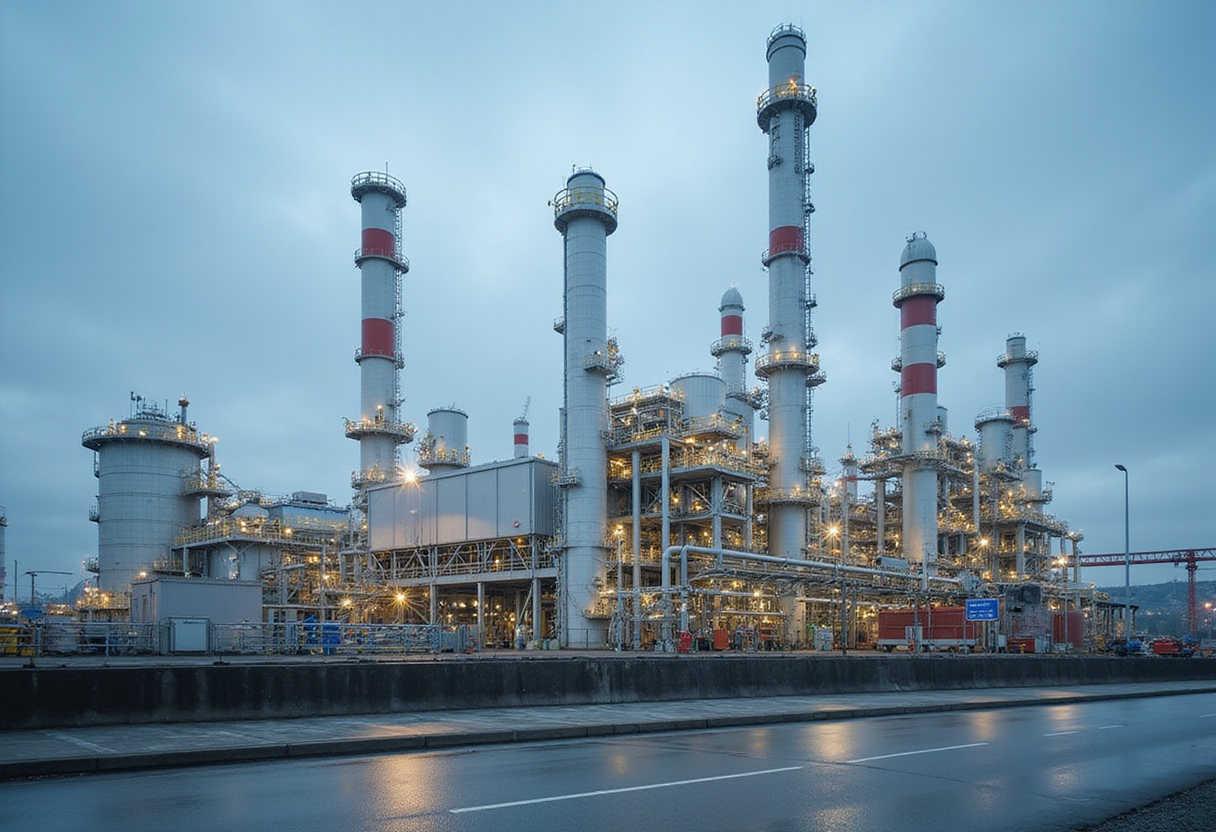
By Priya Raman
Shell has acknowledged a $14 billion price tag for its petrochemical plant, a figure more than double what street analysts had penciled in. The number comes via the Institute for Energy Economics and Financial Analysis (IEEFA), which flagged the admission. That is the whole hard core of this story — one capex line, and a wide gap to consensus.
What does the $14 billion figure actually change?
The arithmetic is blunt. Street estimates sat well below the acknowledged cost. "More than double" means analysts were working from something closer to the high-single-digit billions. Shell's own figure wipes out that margin of comfort in one disclosure.
Takeaway: the plant now carries a sanctioned-cost identity, not a planning-stage guess.
Where is the missing detail?
Here the record thins out fast. The acknowledgment itself is confirmed. What we do not have is equally important:
- No phased cost breakdown by unit (cracker, derivative lines, utilities).
- No revised startup schedule attached to the new number.
- No statement on whether contingency has moved.
- No margin or demand assumptions underpinning the economics at $14 billion.
IEEFA's framing — an energy-finance think tank that stress-tests fossil-sector capital projects — signals scrutiny of the return math, not just the invoice. A capex admission of this size invites the obvious question: what internal rate of return survives the doubling? None of the released material answers it yet.
Takeaway: the cost is confirmed; the economics behind it are not.
Why double the estimate matters downstream
Petrochemical plants live and die on breakeven economics. Doubling capex (the upfront spend on steel, engineering and construction) pushes the product cost curve up unless operating costs or feedstock advantages offset it. Shell has historically argued its integrated downstream slate absorbs such shocks. This time the argument needs numbers attached.
Skeptic's note, and it applies here: cost admissions rarely arrive alone. When a operator confirms a figure this far above consensus, scope changes, schedule slip or contractor claims usually surface in the following quarters — none has been announced, so treat that as a watch item rather than a prediction.
Takeaway: one disclosed overrun can foreshadow several undisclosed ones.
What to watch next
The near-term markers are straightforward. Watch for Shell's next capital markets update, where management typically reconciles project capex against portfolio guidance. Watch for any revised mechanical-completion or startup date, which IEEFA did not report and Shell has not pinned to the new cost figure. And watch the petrochemical margin environment, since a $14 billion base demands stronger cracker spreads (the margin between feedstock and product prices) to clear hurdle rates.
The disclosure answers one question — what the plant costs. It leaves the harder ones open.
via Google News: Refineries and petrochemicals (Source)
More from Priya Raman
Show full bio
Senior reporter covering technology and product news in Oil and gas industry operations and markets at Rig & Refinery.
487 articles
Adjoining reports
- IEEFA: Shell's Pennsylvania Petrochemical Plant Unlikely to Hit Financial Targets
- Formosa's Louisiana petrochemical complex hits fresh setback
- 1.2 Million Tons Per Year: Türkiye Petchem Proposal Takes Shape
- IEEFA: Shell's Monaca plant exposes Pennsylvania petrochemical underperformance
- Nigeria signs gas deal for proposed $3.5 billion petrochemical plant