Well report No. RR-2160 · T12N · R9W · SEC 36 · filed October 13, 2026
Midstream & PipelinesWell report
Syrian Oil Company: Deir ez-Zor gas pipeline fire still burning
The Syrian Oil Company says a gas pipeline fire south of Deir ez-Zor is still burning and containment has failed. No isolation, cause or restart timeline has been given.
Field notes
- Syrian Oil Company says the gas pipeline fire south of Deir ez-Zor is ongoing.
- All containment efforts have failed so far, per the company's statement.
- No cause, casualty, or restart timeline has been disclosed.
- The incident affects a gas pipeline in Syria's eastern hydrocarbon corridor.
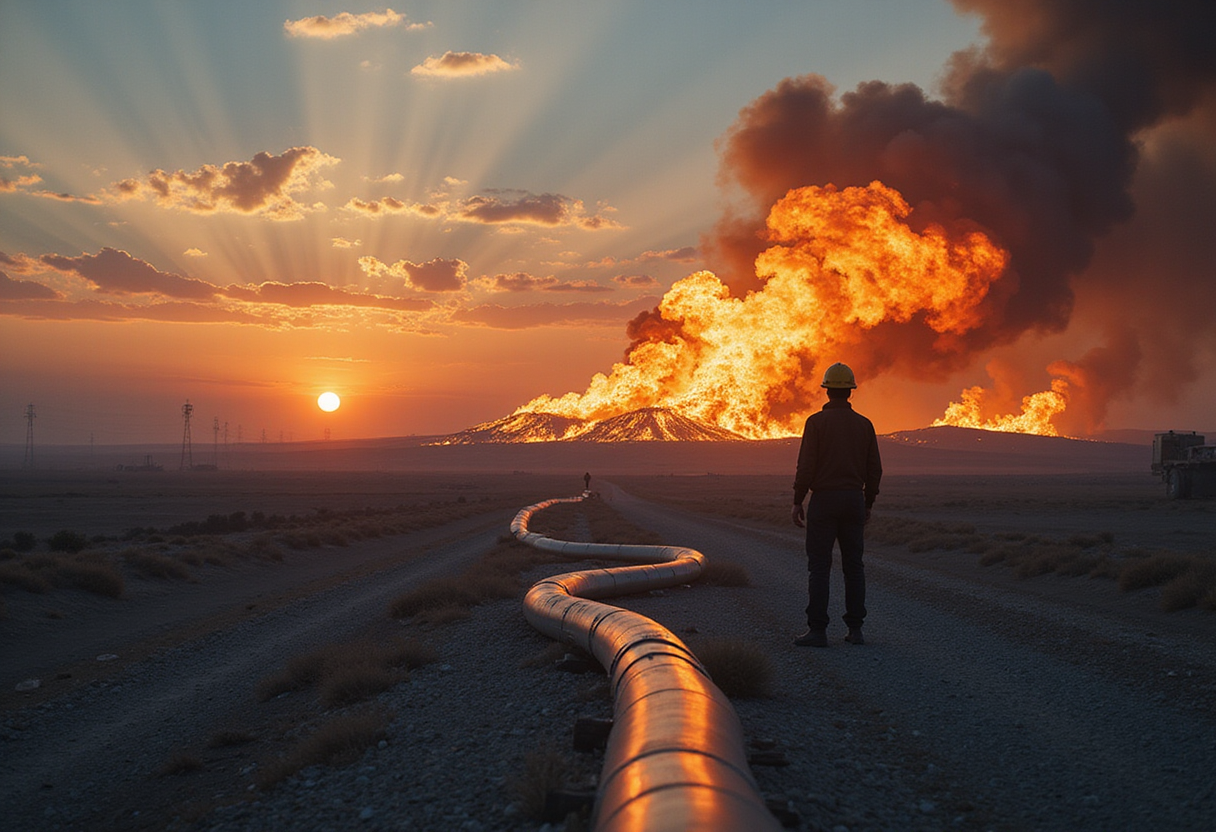
A gas pipeline fire south of Deir ez-Zor is still burning, and the Syrian Oil Company says efforts to contain it have failed so far. The company's statement is the only official account of the incident on record, and it leaves the two questions that matter to operators unanswered: when the line can be isolated, and how much throughput has been lost.
What do we actually know?
The confirmed facts are narrow:
- The incident involves a gas pipeline located south of Deir ez-Zor, in eastern Syria.
- The Syrian Oil Company says the fire is ongoing.
- Containment attempts to date have failed.
No casualty figures, no cause attribution, and no restart estimate appear in the company's statement. Anything beyond those three points — sabotage claims, production volumes, operator status — is speculation until Damascus or the operator publishes an incident report.
Why the location matters
Deir ez-Zor sits on the Euphrates and anchors what remains of Syria's hydrocarbon east, a region where gas gathering lines feed power generation and refinery operations already running at reduced rates after more than a decade of conflict-related damage. A pipeline fire that cannot be isolated compounds a familiar problem: repairs in this corridor have historically required security clearance before crews can even assess the breach.
For practitioners, the operational read is straightforward. A fire that resists containment usually means the line has not been fully depressurized, or that valve access is compromised. Until the operator confirms isolation, secondary damage to adjacent infrastructure — tie-ins, valve stations, parallel crude lines — remains on the risk register.
What should watchers track next?
The Syrian Oil Company has set no schedule for a follow-up statement. The signals that would move this story from incident to operational event are:
- Confirmation that the affected segment has been isolated and depressurized.
- A cause determination, whether equipment failure or third-party damage.
- Any estimate of deferred gas volumes and the downstream power or refining loads tied to them.
Each of those disclosures would come from the operator or Syrian energy authorities, not from regional commentary. Until then, the fire itself is the only verifiable number-free fact in the file — and it is still burning.
The watch item is the operator's next bulletin: isolation confirmation is the milestone that starts the clock on repair and restart estimates.
via Google News: Pipelines and midstream (Source)
More from James Calloway
Show full bio
Staff writer covering people, launches and day-to-day practice in Oil and gas industry operations and markets at Rig & Refinery.
478 articles
Adjoining reports
- Syria blames sabotage for fire on Al-Shola–Deir al-Zour gas pipeline
- Fire Hits Gas Pipeline Between Al-Shula and Deir el-Zor in Syria
- Damaged Northeast Syria Oil Pipeline Declared 'Sabotage' by Damascus
- Syria Confirms Sabotage Attack on Northeast Transmission Pipeline
- Syria Pipeline Blast Exposes Fragility of Post-War Energy Network