Well report No. RR-3272 · T22N · R39W · SEC 22 · filed October 10, 2026
Midstream & PipelinesWell report
WSJ headline flags Saudi East-West Pipeline as market mover
WSJ headline frames Saudi Arabia's East-West Pipeline as the asset 'rocking oil markets,' prompting upstream-and-downstream desks to parse the implied catalyst behind the coverage.
Field notes
- WSJ published the headline 'What Is Saudi Arabia's East-West Pipeline and Why Is It Rocking Oil Markets?'
- WSJ frames the pipeline as 'rocking oil markets'
- The pipeline is identified as Saudi Arabian infrastructure
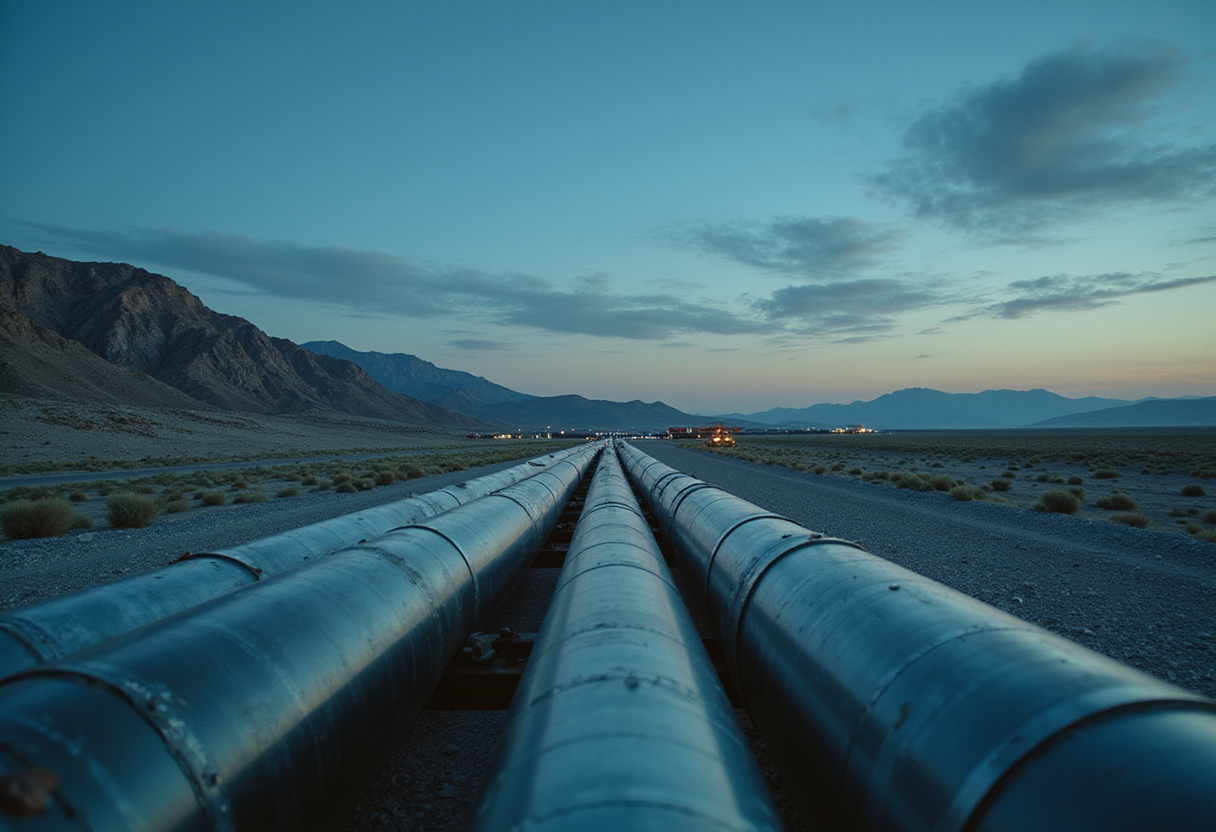
The Wall Street Journal has elevated Saudi Arabia's East-West Pipeline to headline status, asking in a published headline "What Is Saudi Arabia's East-West Pipeline and Why Is It Rocking Oil Markets?" The framing alone carries weight for the upstream-and-downstream desk.
A tier-one financial publication does not dedicate headline coverage to a single midstream asset without an underlying catalyst. WSJ's headline framing — "rocking oil markets" — implies a near-term operational event, a capacity change, a throughput anomaly, an OPEC+ policy linkage, or a pricing dislocation tied to Saudi crude logistics.
The pipeline itself sits at the intersection of Saudi Aramco's upstream base and the kingdom's export alternatives. Eastern Province production can route either through Arabian Gulf terminals — and onward through the Strait of Hormuz — or, via the pipeline, to Red Sea terminals on the kingdom's western coast. That geographic optionality shapes term-contract allocations, OSP differentials, and spot pricing across the Middle East crude complex.
When WSJ links that optionality to market movement, the implied catalyst sits in a familiar basket:
- Saudi Aramco's monthly official selling price (OSP) differentials to term-contract customers in Asia, Europe, and the United States
- Brent-Dubai exchange of futures for swaps (EFS) moves that price Middle East crude against waterborne benchmarks
- Red Sea loading programs, hull availability, and insurance premiums tied to routing
- OPEC+ ministerial guidance on production levels and export allocations
Trade-press coverage of Saudi midstream assets has historically preceded operational disclosures by Saudi Aramco, JCC pricing recalibrations by Asian refiners, or shifts in Saudi crude's relative pricing versus Iranian, Iraqi, and Kuwaiti grades.
The full WSJ article, once published, will likely carry three elements that the upstream-and-downstream desk needs:
- Specific capacity or throughput figures tied to the pipeline's recent activity
- Named sources — Saudi Aramco officials, trading desk principals, refining-side commercial leads
- A clear linkage to a benchmark, term-contract window, or OPEC+ decision
Until those specifics land, market participants should treat the headline as a flag, not a fact set. The pipeline's strategic purpose has been documented across decades of trade-press reporting; what the WSJ headline implies is a near-term event warranting closer monitoring.
For the desk, the coverage pattern itself is the signal. Saudi midstream infrastructure rarely surfaces in tier-one financial headlines absent a commercial catalyst — a buyer inquiry, a maintenance window, a capacity expansion announcement, or a geopolitically driven routing shift. WSJ's headline points to one of those categories.
What will the full WSJ report add?
The headline raises the natural reader question. Trade-press expectation runs to three data points: a hard throughput or capacity number, a named source at Saudi Aramco or a counterparty trading desk, and a clear linkage to either an OSP window, a Brent-Dubai EFS move, or an OPEC+ ministerial signal.
Watch items
- The full WSJ report and any subsequent follow-up coverage
- Saudi Aramco operational disclosures on pipeline throughput and Red Sea terminal loadings
- Brent-Dubai EFS and Saudi OSP differential moves over the next trading sessions
- Any OPEC+ ministerial statement referencing Red Sea export routing or Saudi crude allocations
via Google News: Pipelines and midstream (Source)
More from Priya Raman
Show full bio
Senior reporter covering technology and product news in Oil and gas industry operations and markets at Rig & Refinery.
477 articles
Adjoining reports
- East-West Pipeline Flows Uninterrupted, Source Tells Reuters
- Saudi East-West pipeline flows as normal, Bloomberg reports
- Oil Slides as Saudi Pipeline Plans, Hormuz Talks Weigh on Market
- Oil Drops as Saudi Arabia Ramps Up East-West Pipeline Flows
- Middle East Conflict Puts Saudi Arabia's Oil Pipeline to the Test