Well report No. RR-7080 · T14N · R39W · SEC 2 · filed October 16, 2026
Upstream Drilling & ProductionWell report
Yasuní vote takes 55,000 bpd offline in Ecuador's Amazon basin
Ecuadorians voted 59% to 41% on August 20, 2023 to end drilling in Yasuní National Park, removing roughly 55,000 bpd from the ITT block and reshaping OPEC's smallest member.
Field notes
- Roughly 59% of Ecuadorian voters chose to stop oil drilling in Yasuní National Park on August 20, 2023
- The Ishpingo-Tambococha-Tiputini block produces about 55,000 barrels per day inside the reserve
- Ecuador's national crude output runs around 480,000 barrels per day, mostly from the Oriente formation
- The ITT block holds an estimated 700 million barrels of recoverable reserves
- State operator Petroecuador has run the ITT acreage since the early 2010s
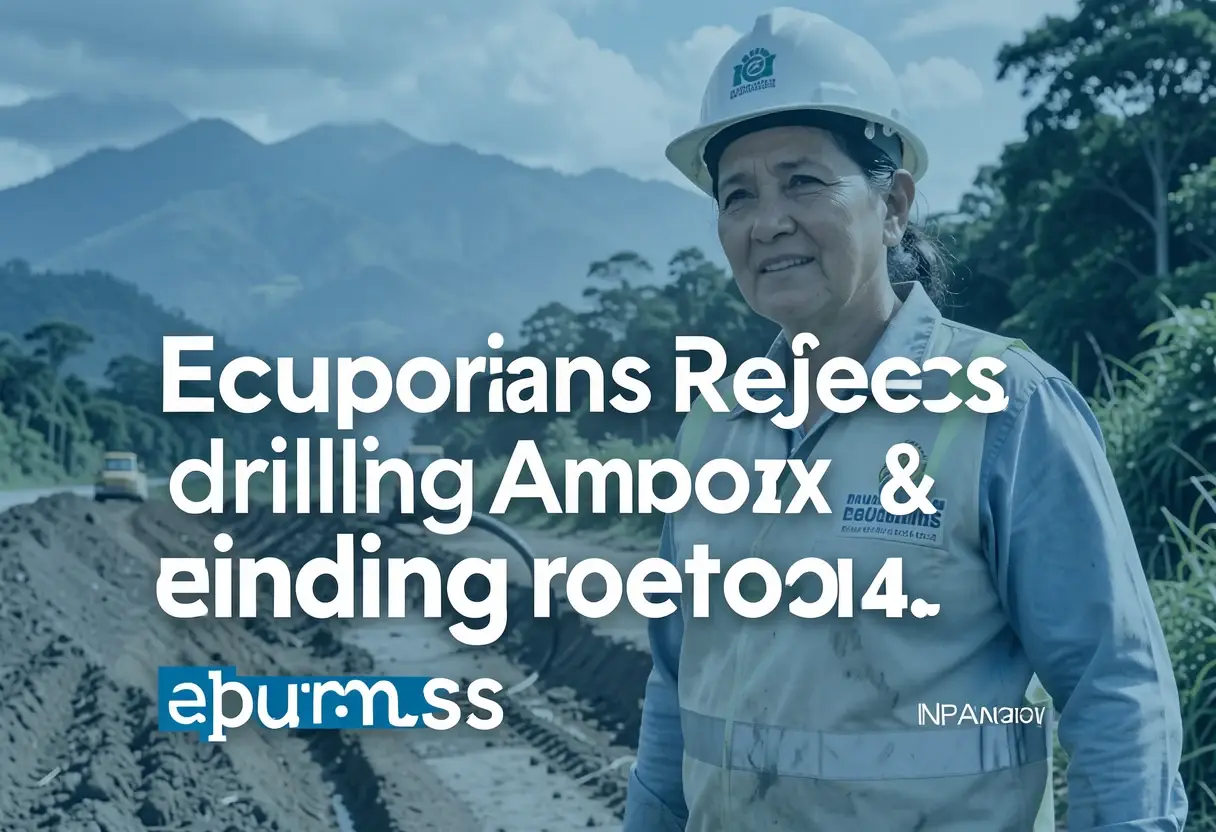
Ecuadorians voted 59% to 41% on August 20, 2023 to end oil drilling in Yasuní National Park. The ballot decision shuts down the Ishpingo-Tambococha-Tiputini block, removing roughly 55,000 barrels per day from one of the most biodiverse reserves in the Amazon basin.
That's the operational line that landed on upstream desks when the count finished in Quito. The tally took most of the night, and the national electoral council posted the figures well after midnight.
By morning, Ecuador had done something no major Latin American producer had done before: it had answered at the ballot box whether drilling should continue inside a protected Amazon reserve. The result bound the government to act.
The referendum ended years of political maneuvering over one of the most biodiverse tracts of rainforest left on Earth. State operator Petroecuador has run the ITT block since the early 2010s, drilling wells beneath canopy that conservation groups had spent decades trying to protect. Environmentalists had gathered signatures for years to force the vote; the government eventually called it itself, gambling — and losing — that voters would back the revenue.
For basin watchers, the operational math is straightforward. Ecuador produces around 480,000 barrels of crude per day, much of it from the Oriente formation — a Cretaceous-era source-rock system that has fed the country's export schedule since the 1970s, when Texaco first started tapping the region.
Yasuní sits on the western edge of that geology, and the ITT acreage was the prize of frontier drilling inside the park. Removing 55,000 bpd from the production stack shrinks the country's effective capacity by more than 10%, before anyone counts the secondary drag on pipeline throughput and the Esmeraldas export terminal on the Pacific coast.
What does the ruling actually change?
The referendum triggered a constitutional mechanism that requires the government to phase out activity in the block. New drilling ends. Existing wells — there are several dozen across the ITT acreage — face a defined countdown to closure, the mechanics of which the energy ministry still has to publish. Contractors, rig crews, and the Waorani indigenous communities who live inside the reserve all sit on the same dependency tree, and each will feel the transition differently.
The political economy is harder. Ecuador remains OPEC's smallest member, and every barrel lost abroad reshapes the quota conversation in Vienna. The country's finance ministry, already running on an IMF program, faces a tighter revenue curve at exactly the moment bondholders want to see fiscal discipline. Petroecuador's remaining Oriente acreage can absorb some of the lost volume through infill drilling and workover campaigns, but not all of it — and not on a timeline that matches the referendum's mandate.
Then there's the geology. The ITT block holds an estimated 700 million barrels of recoverable reserves, much of it untouched. That crude stays in the ground by voter choice — a sentence that hasn't been written about an OPEC country in modern memory, and a data line that will sit in every long-term supply forecast from now on.
What's the watch list?
- The energy ministry's formal decree and the shutdown schedule it sets
- Compensation flows to affected Waorani communities and contractor settlements
- Ecuador's posture at the next OPEC ministerial meeting
- Infill drilling plans on Petroecuador's non-park acreage
- Pipeline and terminal throughput at Esmeraldas
The Yasuní vote wasn't really a referendum on oil. It was a referendum on what a basin looks like when voters, not ministries, get the final word. And the export schedule won't forget it.
via Google News: Oil drilling and production (Source)
More from Elena Vasquez
Show full bio
News editor covering technology and product news in Oil and gas industry operations and markets at Rig & Refinery.
501 articles