Well report No. RR-4820 · T24N · R10W · SEC 24 · filed October 13, 2026
Refining & PetrochemicalsWell report
Israel Hits Iran's Asaluyeh Petrochemical Complex, Defence Minister Says
Israel's defence minister confirmed a strike on Iran's Asaluyeh petrochemical complex, putting the South Pars-linked downstream hub at the centre of the conflict.
Field notes
- Israel struck Iran's petrochemical complex at Asaluyeh, Defence Minister Israel Katz said.
- Asaluyeh is the industrial base for Iran's South Pars gas development on the Gulf Coast.
- No details on damaged units, damage extent, or operational status were disclosed.
- Analysts framed the strike as a supply-risk event for Gulf petrochemical exports.
- Watch item: petrochemical cargo loadings from Asaluyeh in coming weeks as the damage signal.
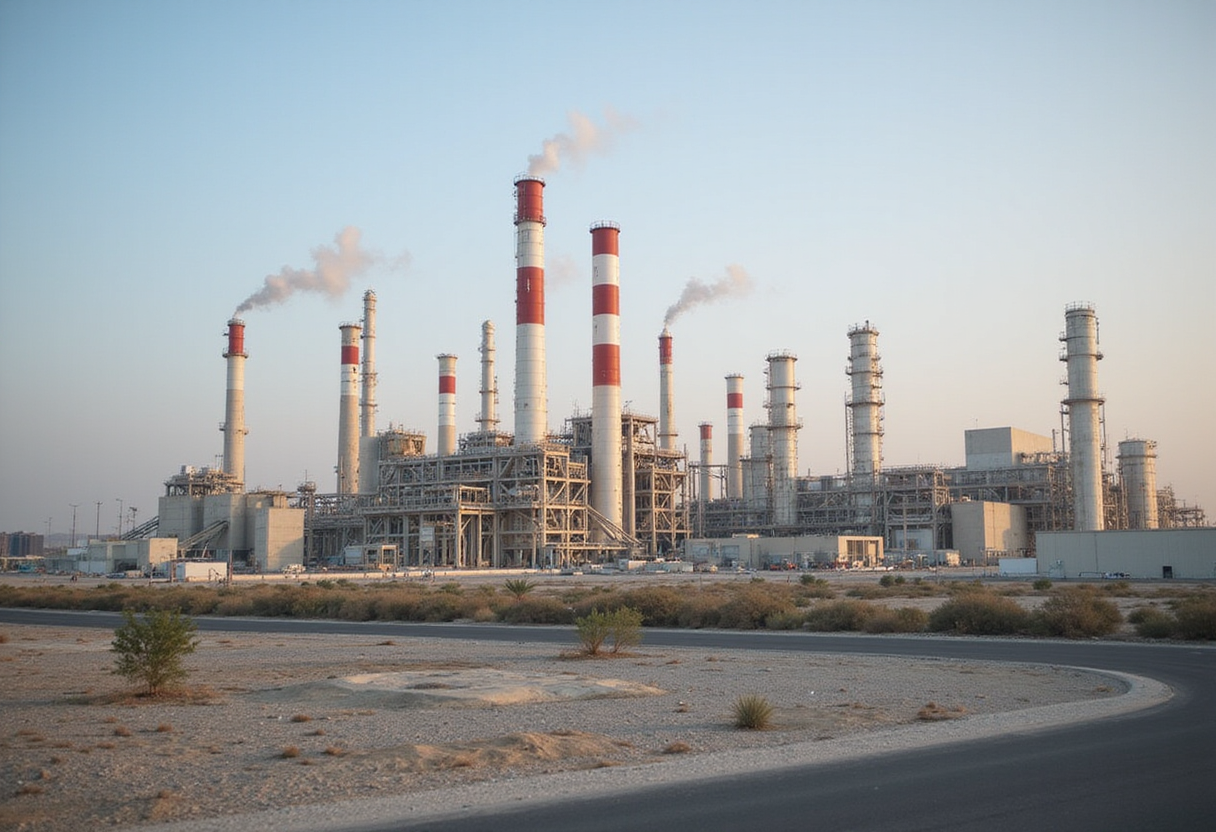
Israeli forces struck Iran's petrochemical complex at Asaluyeh, Israel's defence minister said, in an attack that puts one of the Islamic Republic's most important downstream complexes directly in the crosshairs.
The confirmation came from Defence Minister Israel Katz, whose office announced the strike on the Gulf Coast facility. Reuters reported the development. Asaluyeh sits on Iran's southern littoral, adjacent to the offshore South Pars gas field, and hosts the cluster of petrochemical plants that anchor the country's non-crude export earnings.
Until now, the exchange of fire between the two states had drawn most attention for its reach into energy infrastructure on both sides. What the Asaluyeh strike changes is the target set.
What does the strike change?
The significance is the target class. Attacking a petrochemical complex is not the same as hitting a military site or even a refining installation. Petrochemical output is the piece of Iran's hydrocarbon economy that turns gas and NGL feedstock into exportable product — methanol, urea, polymers — sold largely to Asian buyers outside the dollar system.
That revenue stream has grown more important to Tehran as crude exports have cycled up and down under sanctions pressure. A damaged complex at Asaluyeh doesn't just dent production figures; it squeezes the cash line that keeps the broader energy sector funded.
The defence minister's announcement gave no details on which specific units were hit, the extent of damage, or whether operations had halted. Iranian officials had not, at the time of the report, published an independent assessment of the complex's condition.
Why Asaluyeh matters
Asaluyeh is not a peripheral facility. It is the industrial shore base for South Pars, the Iranian side of the world's largest gas reservoir, shared with Qatar. Around it has grown a chain of petrochemical plants that together account for the bulk of Iran's petrochemical nameplate capacity.
For traders and analysts, the facility's exposure cuts two ways:
- Feedstock risk — gas processing and fractionation at the complex supply the plants downstream; damage at the front end idles everything behind it.
- Export risk — petrochemical cargoes from the Gulf Coast loading points are a sanctions-resistant revenue channel; disruption hits the treasury, not just the operators.
No company-level statements from the plant operators had surfaced in the initial reporting, and no force majeure declarations were confirmed.
How are markets reading it?
Price commentary in the hours after the announcement treated the strike as a supply-risk event rather than an immediate supply-loss event — a distinction worth keeping. Analysts quoted in the wake of the attack pointed to the premium the market tends to attach to Gulf infrastructure strikes: freight, insurance and the willingness of shipowners to keep calling at regional terminals.
That is analysis, not settled fact. The actual volume impact depends entirely on what was hit and for how long it stays offline — numbers that, so far, neither government has provided.
What comes next
The watch items are concrete. Watch for imagery-based damage assessments of the Asaluyeh complex, for any statement from Iranian petrochemical operators on run rates, and for signs that war-risk cover for Gulf charterers reprices. The clearest signal of all would be a cargo count: petrochemical loadings from the Asaluyeh area over the coming weeks will tell the market more than any communiqué.
For now, one line stands: Israel has confirmed a strike on Iran's petrochemical heartland, and the world's largest gas field now has a war on its doorstep.
via Google News: Refineries and petrochemicals (Source)
More from Elena Vasquez
Show full bio
News editor covering technology and product news in Oil and gas industry operations and markets at Rig & Refinery.
433 articles
Adjoining reports
- Israeli Strike Hits Iran's Karoon Petrochemical Complex
- Israeli Strike Hits Iranian Petrochemical Plant Before Trump Deadline
- Israel hits Iranian petrochemical plant; ceasefire shows strain
- IDF Strike Hits Iran's Largest Petrochemical Complex
- Israel Strikes Iranian Petrochemical Plant as Conflict Escalates