Well report No. RR-8617 · T21N · R22W · SEC 9 · filed October 16, 2026
Midstream & PipelinesWell report
Pipeline Explosion in Rivers Injures 20, Damages 50 Homes
An oil pipeline explosion in Rivers state injured 20 people and damaged 50 houses, TheCable reports. Operator and cause remain unconfirmed.
Field notes
- Oil pipeline exploded in Rivers state, Nigeria, per TheCable.
- 20 people injured in the blast.
- 50 houses damaged.
- Pipeline operator and cause not yet confirmed in the report.
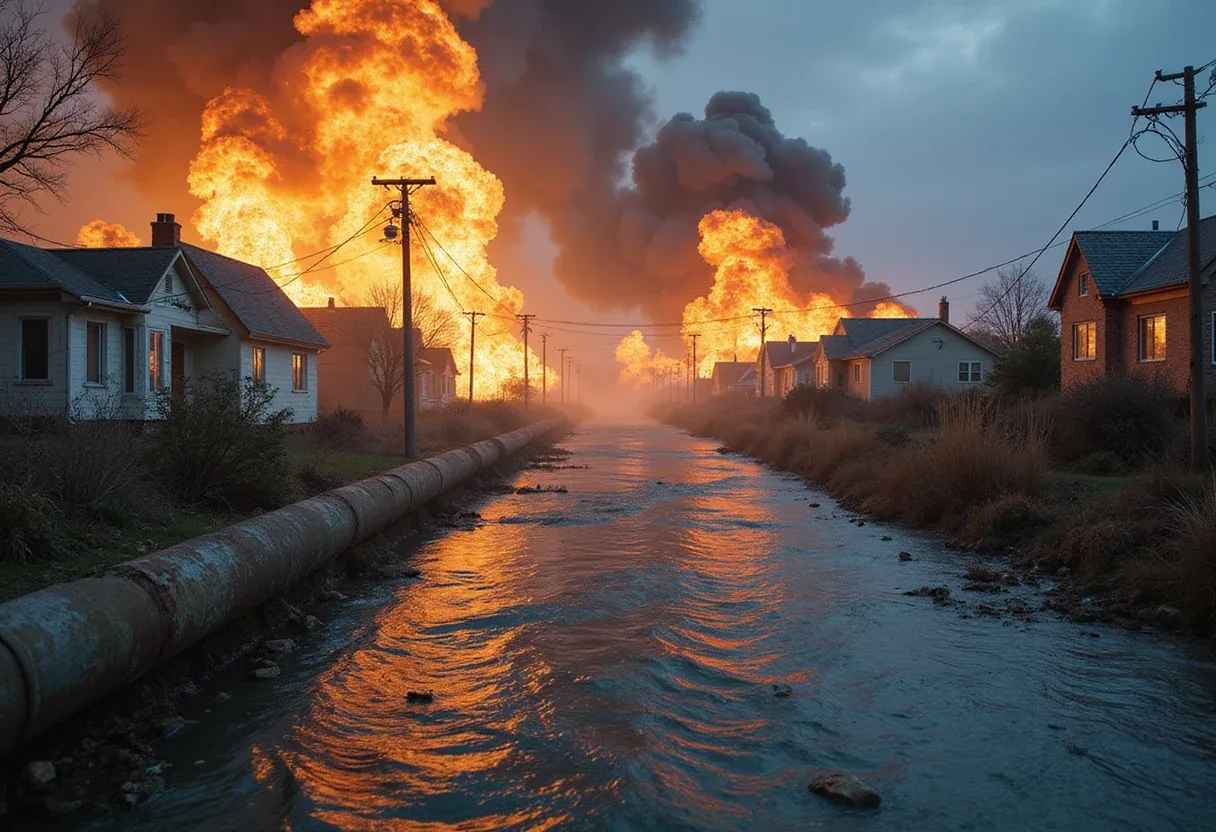
Twenty people sustained injuries and 50 houses suffered damage when an oil pipeline exploded in Rivers state, in Nigeria's Niger Delta, according to a report by TheCable. The incident adds another entry to the region's long ledger of pipeline failures, and the numbers alone frame the scale: two dozen casualties rounded down, half a hundred homes in need of repair.
What happened in Rivers?
TheCable's account gives the operational headline figures directly: 20 injured, 50 houses damaged. That casualty count is the sort of number a desk editor can hold onto. It is large enough to indicate a blast radius reaching residential structures, not merely a manifold or a right-of-way fire.
Rivers state sits at the heart of the Niger Delta, the basin that carries the bulk of Nigeria's crude output and most of its pipeline incidents. The report did not name the operator of the line, the pipeline itself, or the throughput it carried at the moment of rupture. Those gaps matter. Without an operator statement, the market cannot price the outage, and downstream refiners cannot adjust feedstock assumptions.
The cause also remains unconfirmed. In this basin, the usual candidates are third-party interference, corrosion, and operational failure, in roughly that order of statistical habit. TheCable did not attribute a cause. Neither will we.
Why does one blast in the Delta matter?
The Niger Delta's pipeline network moves crude from onshore and swamp fields to export terminals at Bonny and Forcados, among others. A single line failure rarely moves national output figures on its own. The pattern of failures does. Each incident of this kind tends to bring force majeure declarations, repair timelines measured in weeks, and deferred shut-in volumes that show up later in monthly reports from the Nigerian Upstream Petroleum Regulatory Commission.
For context on the damage figure: 50 houses damaged in one event is a neighborhood-scale impact, not a scattered one. Twenty injured persons arriving at local medical facilities would strain the clinics nearest any Delta right-of-way, which are rarely built for industrial-casualty surges.
What comes next?
The watch items are straightforward. First, an operator or regulator statement identifying the pipeline and its status — flowing, shut in, or under force majeure. Second, a casualty revision, since early counts in pipeline incidents tend to move in one direction. Third, a cause determination, which will decide whether this reads as an integrity failure or a security event.
For now, the confirmed facts stand at 20 injured and 50 houses damaged, per TheCable. Everything else, including the responsible company, is the next paragraph waiting to be written.
via Google News: Pipelines and midstream (Source)
More from Daniel Okafor
Show full bio
Market editor covering companies, deals and strategy in Oil and gas industry operations and markets at Rig & Refinery.
468 articles